MPC & Data Preview
Feb 5, 2026
AdvisorAlpha
Summary
RBI likely to hold rates, stay dovish, but rising inflation and recovery signals may limit future cuts.
RBI to Stay Dovish, but the Window for Rate Cuts Is Narrowing
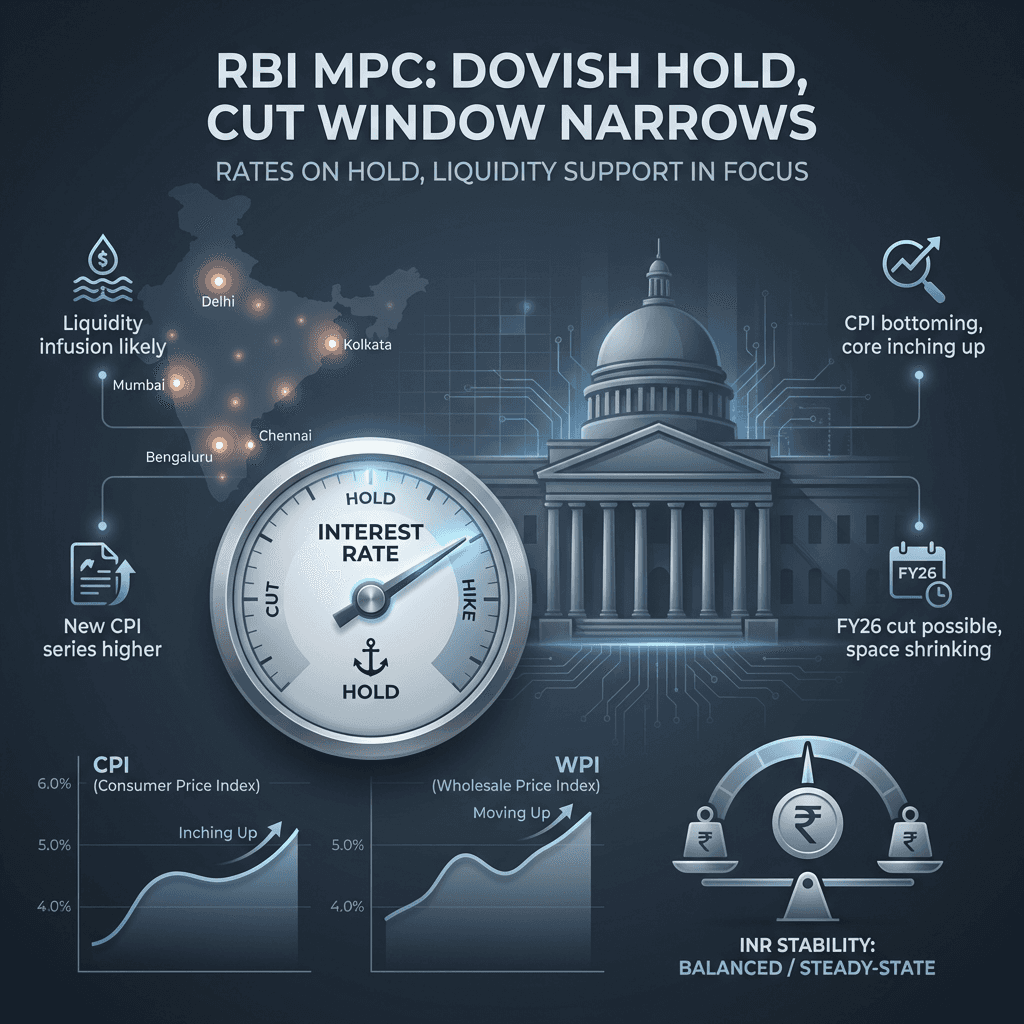
The Reserve Bank of India is expected to maintain a dovish stance at its upcoming policy meeting on February 6, keeping policy rates unchanged while continuing a “wait and watch” approach. However, a combination of shifting inflation dynamics, improving high-frequency indicators, and external developments suggests that the scope for future rate cuts may be gradually shrinking.
Policy Stance: Dovish Hold Likely
The RBI is widely expected to hold rates steady at this meeting. While the central bank remains accommodative in tone, it is unlikely to signal an immediate easing cycle. Instead, policymakers are expected to emphasise data dependence and evolving macro conditions.
Liquidity: Support May Continue
Despite the pause on rates, the RBI may announce additional liquidity infusion measures, as system liquidity remains below levels seen in previous easing cycles. However, liquidity support so far has been largely neutralised by foreign exchange intervention. The recent US–India trade deal and the resulting stability in the INR provide some comfort, but do not materially change near-term liquidity conditions.
Inflation Outlook: Bottoming Out
Inflation data points to a clear turning phase:
CPI inflation (old series) is estimated at 2.5% in January 2026, up from 1.3% in December 2025, driven by food inflation bottoming out and a gradual pickup in core inflation.
Core inflation is expected to inch higher toward ~5%, partly influenced by rising gold prices.
Under the new CPI series (to be launched on February 12), inflation is likely to print above 3% in January, reflecting a lower weight for food items.
On the wholesale side, WPI inflation is projected to rise to 1.5% in January 2026, from 0.8% in December, largely due to favourable base effects and stabilising food prices.
What This Means for Rates
While a 25 bps rate cut in FY26 cannot be ruled out, the policy space for easing appears to be narrowing. High-frequency indicators suggest signs of cyclical recovery, credit growth is showing early signs of bottoming out, and inflation under the new CPI framework is expected to average 20–30 bps higher, at around ~4.3% in FY27.
Bottom Line
The RBI remains supportive, but the macro narrative is shifting. The focus is moving from “how much easing is possible” to “how long policy can stay accommodative” as growth stabilises and inflation edges higher.
Turn insights into informed decisions
Explore research-backed model portfolios and curated stock ideas to make smarter portfolio decisions.
Start Investing